
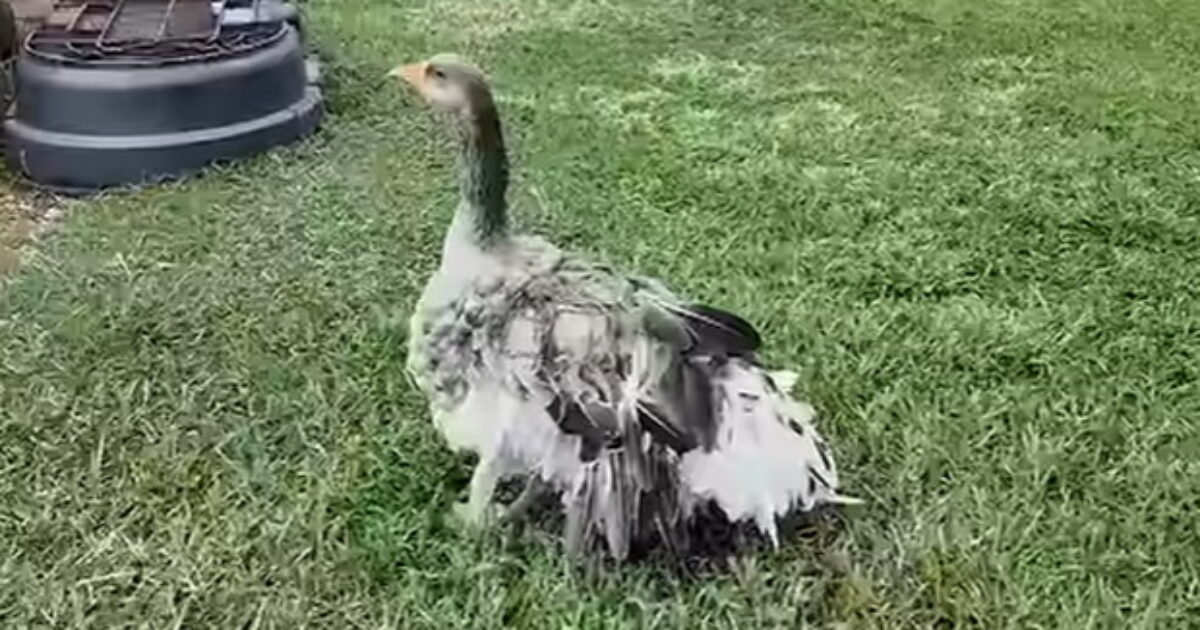

It was supposed to be an ordinary evening on a quiet stretch of Texas countryside. Dinner was done. The TV was on. Dad had settled into his chair and drifted off the way tired dads do — head back, remote still in hand.
Outside, the property was still. The barn sat where it always sat. The animals were where they always were.
And then the honking started.
Not the Usual Racket
Anyone who has ever kept geese knows they make noise. That’s practically the job description. They honk at strangers. They honk at dogs. They honk at the mail carrier, at a rustling bush, at absolutely nothing at all.
But this was different.
The family’s pet goose — known around the place simply as Goosey — cut loose with a sound the household had never heard before. Louder. Sharper. Relentless. It wasn’t the casual grumbling of a bird annoyed at a passing car. It was something closer to an alarm.
It was loud enough to punch through a television and pull a sleeping man straight out of his chair.

The Moment He Looked Outside
Dad woke up. Groggy, probably irritated, likely assuming the bird had gotten spooked by a coyote or a shadow.
Then he went to check.
The barn had caught fire.
Let that sit for a second. A family asleep. A television murmuring in an empty-feeling living room. A structure on their own property already burning — and not one human being in that house had any idea.
The only reason anyone knew at all was a goose.
Why This Kind of Warning Matters
Barn fires move fast. Rural properties are full of exactly the wrong ingredients:
- Dry hay and straw that ignite in seconds
- Wooden beams and old construction that feed a blaze
- Stored fuel, feed, and equipment
- Distance from the nearest fire department
- No smoke detectors — because barns almost never have them
That last one is the part people forget. Homes have alarms. Barns usually don’t. A fire can be well underway out there long before anybody in the house smells smoke — and by then, minutes matter more than anything else.
On this night, in this Texas household, the alarm system happened to have feathers.
The Animal Nobody Expected to Be the Hero
Geese have a reputation, and it isn’t a flattering one. They’re loud. They’re territorial. They chase children across yards. They hiss at grown men twice their size and win.
People joke about them constantly. Nobody puts a goose on the list of animals that might one day save your property.
And yet that same stubborn, noisy, in-your-business temperament is exactly what makes a goose useful. They notice things. They react instantly. They do not stop making noise until somebody deals with whatever is bothering them.
The traits that make geese famously irritating are the same traits that made Goosey impossible to sleep through.
That’s the whole story, really. A family didn’t smell the smoke. Didn’t see the glow. Didn’t get a phone alert or a beeping detector. What they got was a bird refusing to shut up until somebody finally got out of the chair and looked.
A Different Kind of Watchdog
Dogs get the credit in stories like this — and often deserve it. But farm families have relied on geese as living alarm systems for a very long time, going back centuries. It’s not sentimentality. It’s just what they do.
Goosey didn’t know what fire was. Didn’t understand danger the way people do. Something was wrong, and the response was the only one a goose has: make noise, and make a lot of it.
That noise reached a sleeping man through a closed door and a running television.
Somewhere in Texas tonight, there’s a family that will never again complain about their goose being too loud. And there’s one very ordinary barnyard bird who has quietly earned a place in the household nobody will ever question again.
Turns out the best alarm on the property wasn’t wired to anything at all.