

At a glance
- Location: An emergency department at South Shore Hospital in Massachusetts, with the patient later transferred to a Boston-area tertiary hospital
- Case period: January 2023, with sworn testimony delivered years later during a criminal trial
- Person involved: A woman in her early thirties, brought in as a trauma patient after a fall from a window at her home
- Critical clue: Severe spinal fractures, dangerously low body temperature, and neck and wrist wounds that doctors — and later attorneys — would sharply disagree about
Every trauma call starts the same way: a radio crackles, a resource nurse relays a handful of facts, and a team gathers to prepare for the unknown. On the night of January 24, 2023, the call that came into South Shore Hospital’s emergency department was stark but incomplete — a woman had fallen from a window at her home and was unresponsive. What the medical team did not yet know was how many questions that single patient would eventually raise, or how central their notes and scans would become in a Massachusetts murder trial.
A Trauma One Alert
Dr. Kelly McDonough, an emergency medicine physician with 11 years of experience, was on duty that evening. According to her testimony, hospital staff were told to expect a “trauma one” response — the more serious of two tiers used to classify incoming patients — for a woman who had fallen from a height. Trauma one calls bring together an emergency physician, anesthesia staff, trauma surgeons, and often neurosurgery, along with nurses and technicians, all gathered in a single room before the patient even arrives.
The patient was identified as Lindsay Clancy, born in August 1990. EMS reported she had been found unresponsive outside her home, possibly with a spinal injury — she appeared to move her arms and head, doctors were told, but not her legs.

Searching for a Head Injury
Once Clancy arrived, the team ran through the standard trauma protocol: airway, breathing, circulation, then a broader physical exam. She was breathing on her own at first, McDonough testified, but was intubated shortly after out of caution — a standard step, she said, “for airway protection,” in case an undetected head injury caused her condition to worsen.
Despite that concern, McDonough said she saw no obvious signs of head trauma — no bleeding, lacerations, or abrasions. CT scans of her head, both without and with contrast, came back unremarkable, with no evidence of a skull fracture, aneurysm, or blocked blood vessel. On cross-examination, defense counsel pressed the doctor about whether she had checked for clear fluid draining from the nose — a possible sign of a skull fracture and cerebrospinal fluid leakage. McDonough said she saw none, and a later review of her notes confirmed no such finding had been recorded.
The Wounds on Her Neck and Wrists
Clancy also had lacerations to her neck and to both wrists, on their inner, or “volar,” surfaces. McDonough characterized these as superficial — visible cuts that reached the subcutaneous tissue but showed no active bleeding and no apparent damage to arteries, veins, muscle, or tendons. Because they weren’t actively bleeding, she said, they didn’t require emergency intervention to control blood flow.
Defense counsel challenged that characterization directly during cross-examination, asking whether the wounds were in fact “deep.” McDonough disagreed, maintaining her assessment of superficial injury, even as she acknowledged she had not examined the wounds in exhaustive detail — her focus, she said, was on ruling out injuries that posed an immediate threat to life.

A Body in Crisis
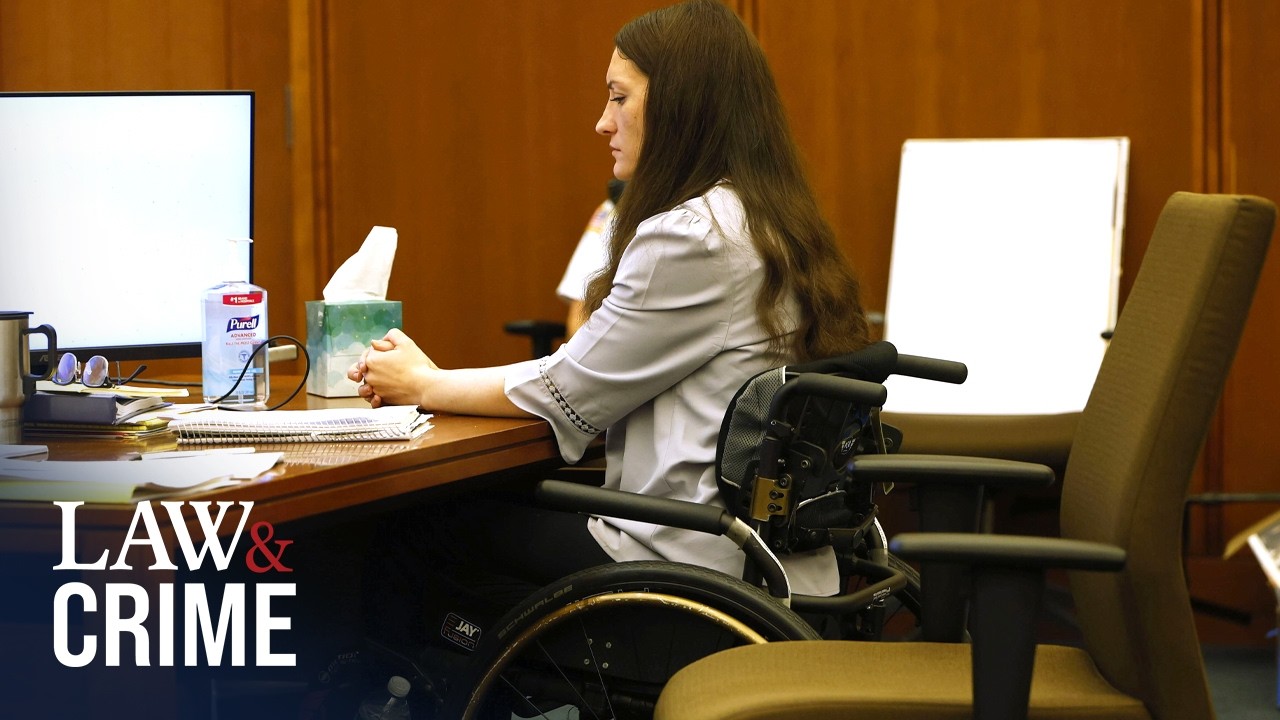
While her head scans looked normal, other parts of Clancy’s body told a different story. Imaging revealed a serious thoracic spine injury, later specified under cross-examination as a complete transection at the T5 and T6 vertebrae — meaning, as McDonough explained, “the bones are no longer one on top of the other. They’re moved apart.” Additional swelling, or edema, was noted in the surrounding spinal region, though McDonough said she would need to consult the written report for precise details.
Compounding the picture, Clancy’s core body temperature had dropped to roughly 82 degrees Fahrenheit — far below the normal 98.6. McDonough testified that such a drop, whether from prolonged exposure or a metabolic imbalance, can disrupt the body’s basic cellular functions. Staff used a forced-air warming device, sometimes called a “bear hugger,” to try to bring her temperature back up.
“I’m sure you’re very busy, but this is a murder trial.”
Transferred — and the Full Picture Emerges Later
After roughly four hours of assessment and stabilization, the trauma team determined that Clancy’s injuries were beyond what South Shore Hospital could fully treat, and she was transferred to a tertiary care center with more specialized resources — later identified in court as Brigham and Women’s Hospital in Boston. No surgery was performed on her before the transfer, McDonough testified, and the team believed she was stable enough to move safely.
What the jury learned only through cross-examination was that Clancy’s condition had apparently worsened significantly after she left South Shore’s care. Defense counsel asked McDonough whether she was aware that Clancy had suffered a cardiac arrest at the receiving hospital, or that she had required a massive blood transfusion there. McDonough said she had not known either of those things — she had handed off a patient she believed was stable, unaware of what would unfold next.

The Moment the Picture Split in Two
For a stretch of the trial, the case seemed to hinge on two very different portraits of the same patient. To the defense, the details pointed to a woman who had suffered catastrophic, near-fatal injuries — a shattered spine, a body temperature low enough to threaten organ function, wounds serious enough to raise questions about survival. To the prosecution, the same medical record described someone whose head was uninjured, whose pupils showed no sign of brain trauma, and whose neck and wrist wounds, however striking to look at, were ultimately superficial.
That tension came to a head when McDonough was asked, point blank, about the severity of what she’d seen. She held her ground on the superficial nature of the visible cuts while conceding the seriousness of the spinal injury — leaving jurors to weigh two seemingly contradictory medical realities from the same overnight shift. Neither the defense nor the prosecution could make the two versions fully align through this witness alone; that job would fall to jurors weighing the entire record.
Where the Case Stands Today
Dr. McDonough’s testimony was one piece of a much larger evidentiary record entered in the case, including certified copies of South Shore Hospital’s medical and imaging records from January 24, 2023. As her testimony concluded, prosecutors moved on to their next witness, continuing to build a fuller account of what happened before and after Clancy arrived at the emergency department that night. Court proceedings in the case have continued to unfold in Massachusetts, with medical experts, first responders, and investigators each adding pieces to a record that began with a single trauma alert — and a set of injuries doctors are still, in some ways, trying to explain.