

Sunday mornings on cable news usually run on a script. A host asks. A guest answers in careful, lawyerly sentences. Nobody says anything that ends up on a million phone screens by dinnertime.
That is not how this one went.
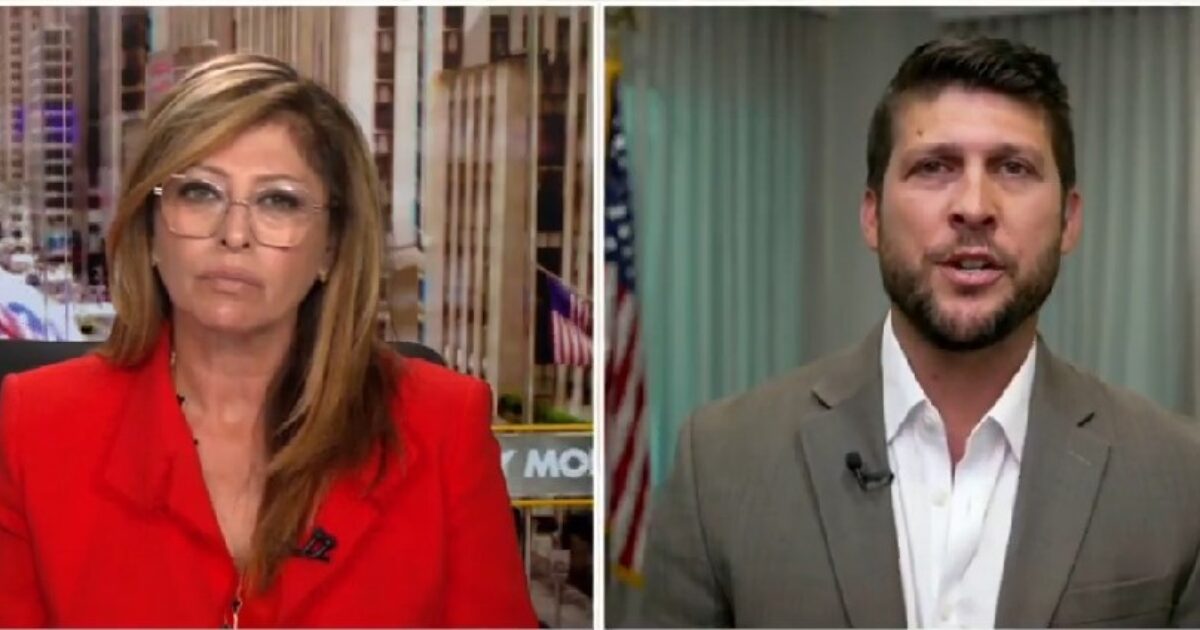
Florida Attorney General James Uthmeier sat down with host Maria Bartiromo on Fox News’s “Sunday Morning Futures” to talk about a subject that has never fully left the American conversation: Dr. Anthony Fauci, the face of the federal government’s response to COVID-19, and the state of Florida’s investigation into him.

A Question Millions of Americans Have Asked
For a lot of people watching at home, this is not an abstract legal story. It is personal.
They remember the shuttered churches and the empty diners. They remember funerals held over a phone screen. They remember grandchildren they could not hug for the better part of two years. And they remember the daily briefings, the shifting guidance, and the man at the podium telling them what to do next.
When the pandemic finally receded, the anger did not. It settled in. It waited. And it turned into a single question that never quite got answered: would anyone ever be held accountable?
Uthmeier came on the air to talk about exactly that.
The Investigation Florida Is Pursuing
The Florida attorney general confirmed to Bartiromo that his office’s investigation into Fauci is active — not shelved, not quietly wound down, not a talking point left over from an election season.
That alone is notable. State attorneys general do not typically train their sights on former federal officials. The legal terrain is difficult. The political blowback is guaranteed. And there is one enormous obstacle sitting in the middle of the road that everybody watching already knew about.
Because in January 2025, on his way out of office, President Joe Biden issued Fauci a preemptive federal pardon — a sweeping act of clemency granted before any charge was ever filed, before any indictment, before any jury heard a word.
It was one of the most unusual moves in modern presidential history. And it is the thing that has frustrated critics ever since. You cannot easily prosecute a man who has already been forgiven for crimes nobody has formally accused him of.
So Bartiromo did what any interviewer would do. She raised the pardon.
The Line That Landed
Uthmeier did not dodge it. He did not retreat into legalese or promise to get back to her with a written statement.
Instead, he offered a sentence so plain that it needed no translation for anyone watching over a cup of coffee:
“I don’t know why you need a pardon if you didn’t do anything wrong.”
Fifteen words. No hedging. No footnotes.
It is the kind of remark that either strikes you as devastating common sense or as unfair political theater — and where you land probably depends on what you already believed walking in. Supporters called it the most honest thing said on television all week. Critics will note that preemptive pardons have been used before, and that accepting one is not the same as confessing to anything.
What is not in dispute is that the line traveled. Fast.
Uthmeier did not lay out a timeline, name targets beyond Fauci, or predict where the investigation ends. He did not have to. In one sentence, he framed the entire fight the way millions of Americans have framed it privately for years.
Fauci has consistently maintained he did nothing wrong and has said he accepted the pardon to spare his family from politically motivated prosecution.
The investigation continues. And so does the argument.