
At a glance
- Location: Horn Island, a barrier island roughly 10 miles off the Mississippi Gulf Coast
- Case period: July 4 disappearance through an ongoing state investigation, with no grand jury date yet set
- Victim: An 18-year-old man who went missing during a Fourth of July boating trip and was later found dead
- Critical clue: A more than one-hour gap in the timeline that independent investigators say cannot yet be verified
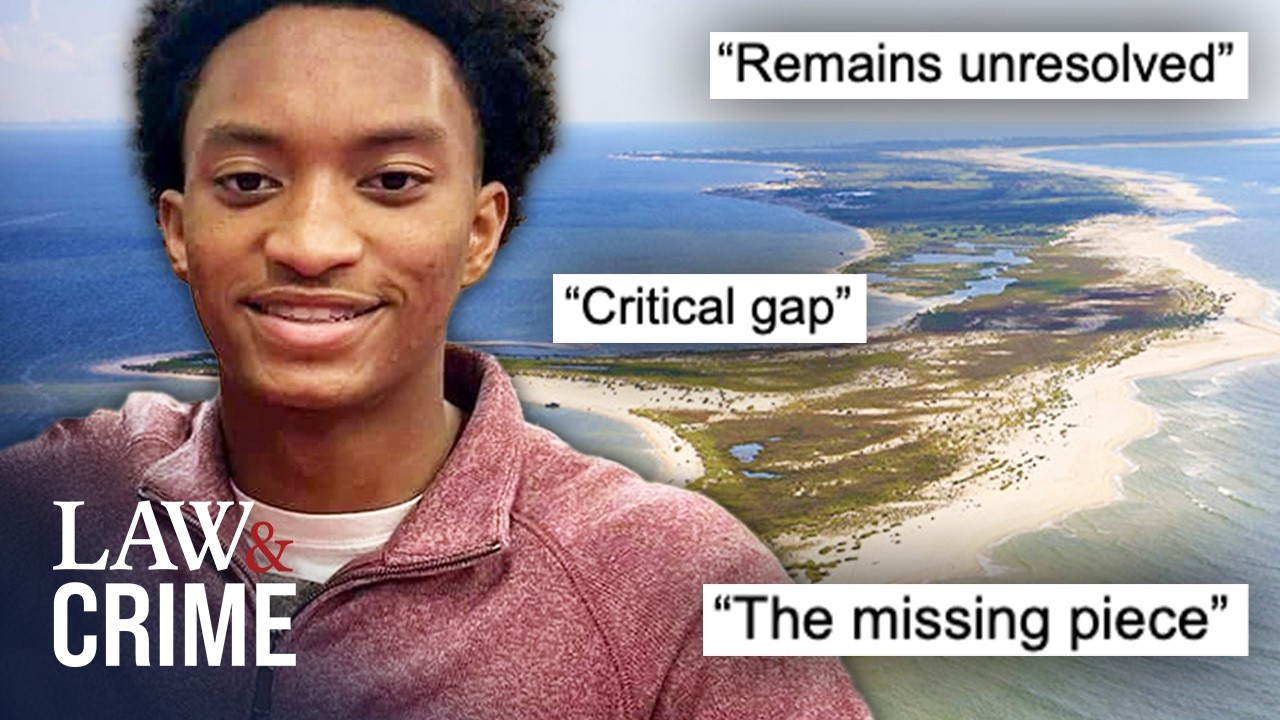
For weeks, the disappearance of 18-year-old Nolan Wells has been defined by one persistent problem: nobody can account for where he was, or who was with him, during a critical stretch of the afternoon he vanished. Now a new independent report is putting that gap under a microscope, and it is raising fresh questions rather than settling old ones.
A Fourth of July Trip That Ended in Tragedy
According to accounts reviewed by investigators, Wells traveled to Horn Island with a group of friends for a Fourth of July boating outing. His friends later returned to the mainland without him, saying he had chosen to stay behind on the island, possibly to talk with a young woman. Two days later, his body was found. His family has said publicly that they have been fighting for a thorough investigation ever since, and they hired civil rights attorney Ben Crump to represent them as the case unfolded.

A Community Divided Over Blame
In the weeks after Wells went missing, intense online speculation focused on the friends who had been with him that day, including Warren Hudson, Jax Patalo and Morgan Seymour. Warren Hudson’s father even offered a $50,000 reward for information. For a time, it seemed to many online observers that the answer to what happened to Nolan Wells was already known — that his own friends were somehow responsible.
That belief has not held up in any formal sense. No charges have been filed against Hudson, Patalo or Seymour in connection with Wells’s death. Instead, the three have launched a GiveSendGo fundraiser with a goal of $100,000 to cover legal costs, saying in the campaign description that they have been “inundated with death threats, threats of violence, and defamation.” An attorney for the Hudson family confirmed to Rolling Stone that the fundraiser is legitimate and that the money would go toward pursuing defamation claims against what he called “the online mob.” Most of the three, according to the fundraiser, could not even attend their best friend’s funeral because of the backlash.
Threats Turn Into Criminal Charges
The online fury surrounding the case has not stayed online. The Sun Herald reported that an Illinois man, Edward James Porter, has been charged with threatening to kill witnesses and their families in connection with the state’s investigation into Wells’s death. Porter allegedly told one witness he was going to “come kill them” and sent them a home address; he is accused of telling another witness he would kill them and dispose of the body. Porter’s arrest follows two earlier arrests connected to threats in the case, one in Ohio and one in California.
Meanwhile, Wells’s mother, Christine Winsley, has pushed back publicly on another narrative circulating in media coverage — that her son was heavily intoxicated before he disappeared. Speaking to Don Lemon, she said one of Wells’s football coaches saw him on the island between 2:45 and 3:30 p.m. that day and described him as “perfectly fine,” not “sloppy drunk.” An internal email from the Mississippi Department of Marine Resources describes Wells’s alcohol intake as heavy, but the coach’s account has complicated that picture. The state’s official toxicology and autopsy reports remain sealed and will not be released publicly until a grand jury is convened, according to District Attorney Angel Myers Makarath, who said every county death that is not from natural causes or a noncriminal car wreck must go through that process.

The United Cajun Navy’s Independent Report
Separate from the sheriff’s office investigation, the United Cajun Navy — the volunteer search-and-rescue group that was on Horn Island within hours of Wells being reported missing — has released its own full investigative report. It includes previously unseen photographs showing three boats anchored side by side, identified in the report only as the Palm Beach, the Triton and “boat X.” The report notes these labels are source annotations, not actual boat registration numbers, meaning investigators would still need corroborating witness statements to determine who was on each vessel.
The report also cites a statement from an independent witness, Caitlyn Bashard, who photographed the boats and said that when her group left the island at 7:30 p.m., Wells was “nowhere in sight” — three hours after his friends say they last saw him.
The Missing Hour
The most striking finding in the Cajun Navy’s report is a gap in the timeline. According to the group, the last independently corroborated sighting of Wells occurred sometime between 3:23 p.m. and 4:27 p.m. — a window of just over an hour that investigators have not been able to fill with verified information.
“I would also stress that you’re talking about hundreds of people… not everybody at that island that day, I’m sure, has come forward,” forensic diver and marine law enforcement expert Alex Beer said.
The report also states that the Cajun Navy could not establish when the Triton boat actually began taking on water — a detail central to the friends’ account that they had to leave the island because the boat was sinking, while Wells stayed behind. Data cited from the Mississippi Department of Marine Resources shows the boat moved at low speed for nearly an hour before resuming normal operation later that evening, a detail Beer said could be consistent with a boat trying to limp back to shore, but does not by itself confirm the friends’ version of events.
The Cajun Navy report lists five specific gaps investigators still need to close, including authenticating the timestamps of photos and video, identifying “boat X” and its occupants, and building a complete roster of who was on each vessel. Until those gaps are resolved, the report states, any narrative claiming certainty about Wells’s movements “exceeds what the supplied evidence can support.”

What Investigators Still Don’t Know
Beer, who reviewed the findings, cautioned that the public may not have access to everything investigators already know. He noted that large gatherings like the one on Horn Island make it difficult to track any single person’s movements minute by minute, and that drownings in particular do not always involve visible struggle — sometimes, he said, a person “just slips away and nobody notices it.” He stressed that without the sealed autopsy results, it remains impossible to say whether the case points toward an accident or something else.
Where the Case Stands Today
The state investigation into Nolan Wells’s death remains active, with the toxicology and autopsy reports withheld pending a grand jury that has not yet been scheduled. The Cajun Navy’s report is independent of that process, and law enforcement has not said publicly how, or whether, it will factor into their findings. For Wells’s family, and for a public that has drawn its own conclusions online, the central hour of July 4 remains unaccounted for — and the case remains open.