
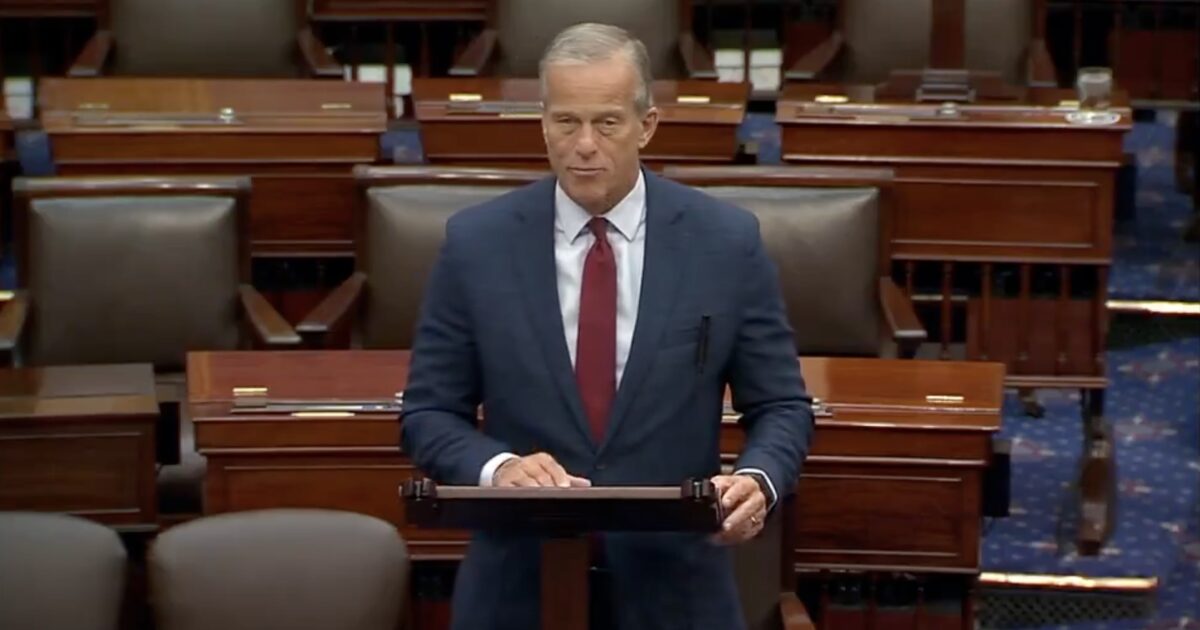

The Senate chamber is empty. The lights are dimmed, the desks are cleared, and most of the hundred men and women who work there have scattered back to their home states for the longest break on the congressional calendar.
Thirty-seven days. That’s the length of the recess Majority Leader John Thune put on the books before gaveling the chamber out.
For most Americans, an August break in Washington barely registers as news. Congress leaves every summer. Lawmakers hold town halls, cut ribbons at county fairs, shake hands at diners. It is one of the oldest rhythms in American politics.
But buried in the fine print of the schedule was a line that set off alarms among the president’s most vocal supporters — and it had nothing to do with where the senators were going.
The Eleven Meetings Nobody Attends
Alongside the 37-day break, Thune scheduled 11 pro forma sessions.
If you have never heard the term, you are not alone. A pro forma session is one of the strangest rituals in the United States Capitol. A single senator walks onto the floor. He or she gavels the Senate into session, says a few words, and gavels it right back out. The whole thing can take less than a minute. No votes are taken. No debate happens. The gallery is usually empty.
On paper, though, the Senate was in session that day. And on paper is exactly where it counts.

Why a One-Minute Session Matters
The reason those eleven brief gavel-ins carry so much weight comes down to a single clause in the Constitution.
The president has the power to fill vacancies during a recess of the Senate — appointments that can seat officials without the usual confirmation vote. It is a workaround presidents of both parties have reached for when nominations stall.
But the Supreme Court drew a line. In its ruling in NLRB v. Noel Canning, the Court held that a break generally has to run long enough — roughly ten days or more — before the recess appointment power kicks in.
Space out enough pro forma sessions across a long summer break, and the Senate never technically goes dark for ten straight days. The window never opens.
That is the math behind the number 11.
The Backlash
The scheduling decision drew sharp criticism from conservative outlets, with The Gateway Pundit casting Thune’s move as a betrayal and labeling the majority leader a “turncoat” for what it described as a deliberate effort to keep President Trump from making recess appointments during the break.
The outlet’s reaction was blunt. Its summary of the situation ran just three words: “They never learn.”
Supporters of the practice point out that it is hardly new. Senate leaders in both parties have used pro forma sessions for years, under presidents of both parties, as a way of guarding the chamber’s confirmation authority. Democrats used them against Republican presidents. Republicans used them against Democratic presidents. The tactic has become a bipartisan institution precisely because whichever party holds the Senate tends to want to keep its say over who gets appointed.
To critics on the right, none of that history matters much. What matters is who holds the White House now — and the argument that a Republican leader is using a procedural tool against a Republican president.
- 37 days — the length of the scheduled Senate break
- 11 — the number of pro forma sessions on the calendar
- 10 days — the rough threshold the Supreme Court set for recess appointments
For now, the chamber stays technically alive. Every few days, someone will walk onto that empty floor, tap the gavel, and walk out again.
It takes about a minute. And in Washington, that minute is the whole ballgame.