

The interview was supposed to be about Tennessee. About roads and schools, about the job Marsha Blackburn says she wants next, and about why a sitting United States senator would trade Washington for the governor’s office in Nashville.
It didn’t stay there for long.
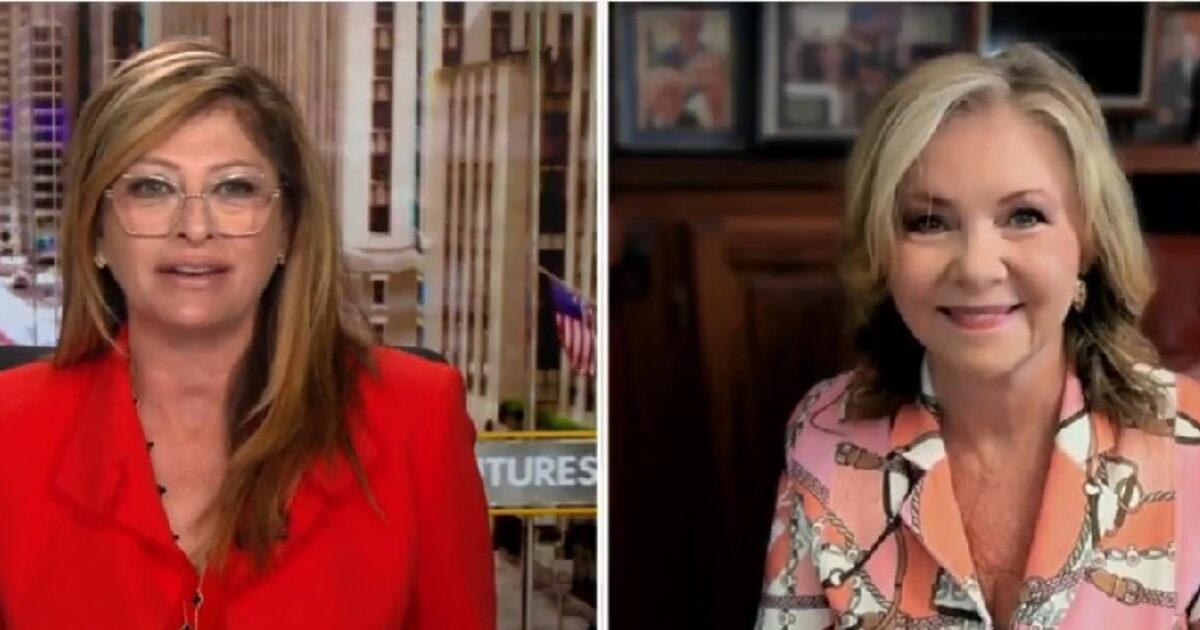
Blackburn joined host Maria Bartiromo on “Sunday Morning Futures” to discuss her campaign for governor of Tennessee. Somewhere in that conversation, the senator turned away from state politics and back toward the chamber she still serves in — and toward a vote she says voters ought to know about.
The Line That Cut Through
Her wording was blunt. “Interesting — every single Democrat voted against voter ID, even though 83% of voters want it,” Blackburn said.
That’s the claim. One party, she argued, lined up unanimously on one side of a question where, by her count, the overwhelming majority of Americans stand on the other.
Voter identification has been one of the most durable arguments in American politics for the better part of two decades. Supporters call it common sense — you show a card to board a plane, cash a check, or pick up a prescription. Critics argue the requirements fall hardest on older voters, rural voters, and people who don’t drive and never needed a license.
What makes Blackburn’s framing land the way it does is the gap she describes. Not a close vote. Not a handful of holdouts. Every single one, against a number she puts north of eighty percent.

Why She Brought It Up at All
Here’s the part that’s easy to miss. Blackburn wasn’t booked to relitigate a Senate floor vote. She was there to talk about becoming Tennessee’s next governor.
So the detour tells you something about how she intends to run.
Election integrity has been a defining issue for Republican voters since 2020, and it remains one of the few subjects that reliably moves people who have otherwise tuned politics out. By raising it on a Sunday morning national broadcast — while introducing herself to voters in a new role — Blackburn signaled that the theme is coming with her from Washington to the campaign trail.
For a candidate who has spent years in Congress, that’s also a way of answering an unspoken question: what does a senator actually bring to a governor’s race? Her answer, at least in that moment, was a receipt.
What the Argument Really Hinges On
Two things are worth separating.
- The vote itself. Blackburn describes a party-line result with no Democratic support.
- The public opinion figure. The 83% she cites is the number she used on air to measure that vote against.
Those are different claims doing different work. The first is about Washington. The second is about everybody else — the people at the diner, the church parking lot, the union hall, who Blackburn is betting don’t see this as a partisan question at all.
A Race Still Taking Shape
Tennessee has not been competitive at the statewide level for Democrats in a long while, and the loudest fight in a race like this usually happens well before November. That reality shapes everything about how a candidate talks in August.
It also explains the tone. Blackburn didn’t hedge, didn’t soften the number, and didn’t spend the segment on the usual gubernatorial checklist of budgets and infrastructure. She went to the fight.
Whether that approach carries her through a long campaign season is the open question. Tennessee voters will have plenty of time to decide whether the argument she made on national television is the one they actually want their next governor making.
For now, one sentence from a Sunday morning interview is doing what her campaign surely hoped it would — getting repeated.